
Water Quality Credits from Stream Restoration Projects


Webinar Details
When:
May 3, 2017 1:00 pm US/Eastern
Length: 01:08 (hh:mm)
Advance Registration NOT required.
View now on-demand.
Presenter(s):
- Barry Southerland, Ph.D., Fluvial Geomorphologist, USDA NRCS National Water Quality and Quantity Team, Portland, OR
- Marc Leisenring, Principal Engineer, Geosyntec Consultants, Portland, OR
- Harbans Lal, Ph.D., Environmental Engineer, USDA NRCS National Water Quality and Quantity Team, Portland, OR
CEU Credits/Certificate Offered:
- Certificate of Participation
- Conservation Planner (CP) - 1 hour Conservation Planning Credit
Virtual Event Format:
Group Viewing Available:
Participants will learn basics of Water Quality Trading and how stream restoration, improved crop management, and conservation practices can lead to water quality credits that can serve as an additional source of income for landowners.
This webinar will introduce basic concepts of Water Quality Trading (WQT) and fluvial geomorphology principles including metrics that are cornerstone in understanding how streams process the hydrology, the role of stream restoration projects in controlling sedimentation and improving water quality (WQ). It will elaborate on the available datasets and approaches for estimating WQ credits from stream restoration projects and considerations for trading programs. Water quality trading is a market-based approach to achieving clean water goals. It provides permitted point sources of water pollution an additional alternative to meet regulatory obligations as well as payment to land owners for implementing improved management and conservation practices. Upland erosion control and reducing nutrient losses from agricultural fields is only one part of the solution for improving water quality at the watershed level. Controlling stream bed and bank erosion, reconnecting floodplains and enhancing natural processing of nutrients is equally important. These projects have great potential for improving in-stream water quality and the overall health of the watershed. USDA has been supporting the WQT approaches through its Office of Environmental Markets and NRCS in developing tools for quantifying WQ credits and providing Conservation Innovation Grants to other entities designing and implementing WQT frameworks around the nation.
This webinar is presented by USDA NRCS Science and Technology.
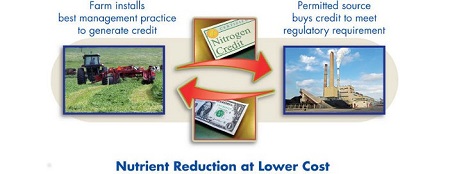
Photo credit: http://wqt.epri.com

 Loading